
Bioavailability is one of those concepts that can quietly save you thousands in the health and wellness space if you understand and apply it early.
When I first got into longevity and performance optimization, I only had a basic grasp of it.
Over time, I realized that even having this small edge helped me avoid wasting money on low-quality supplements and ineffective protocols.
Most people have heard the term before, at least loosely. If not, the simplest definition is this
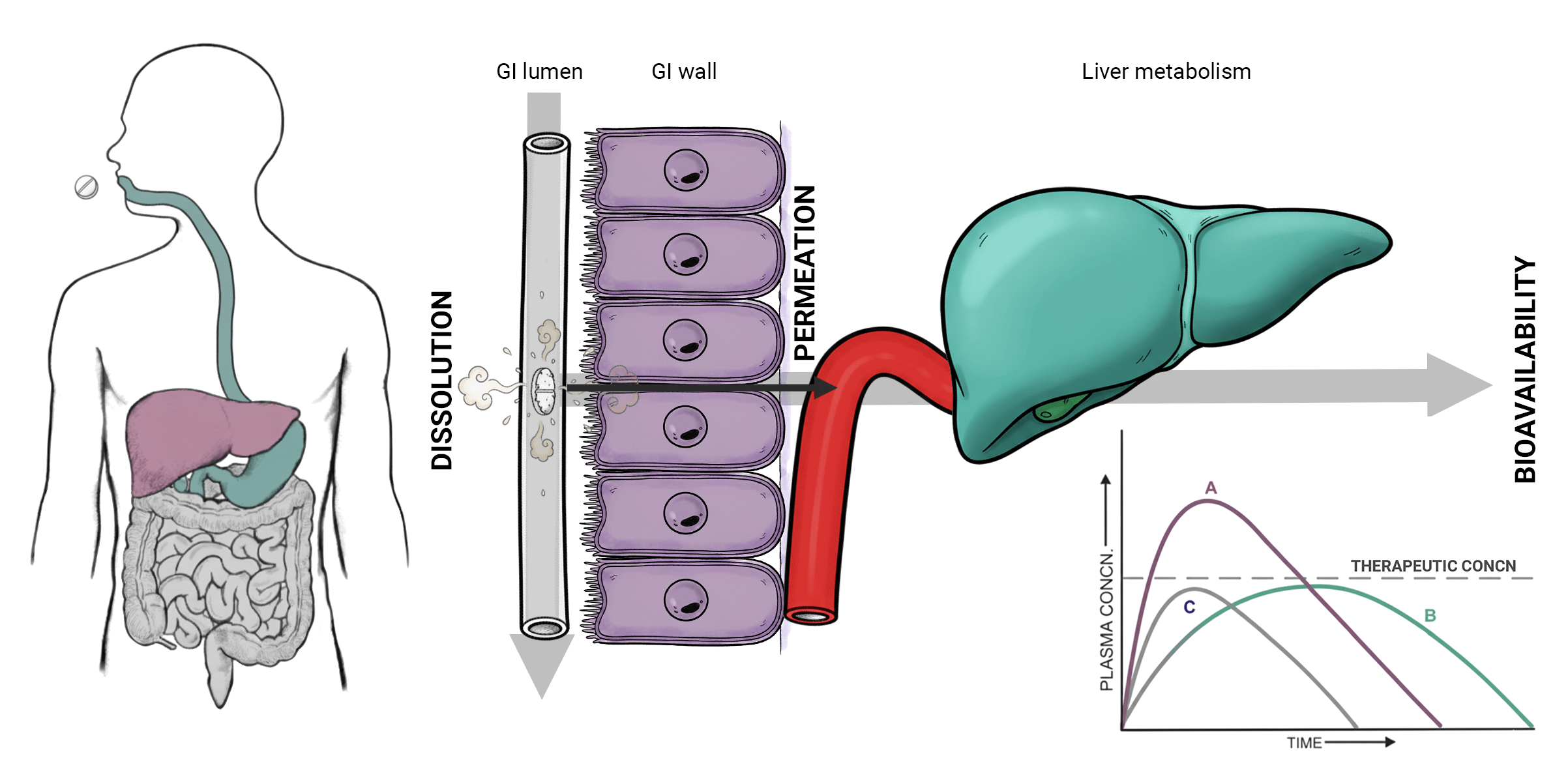
Bioavailability refers to how much of a substance actually gets absorbed and used by your body.
This isnt the amount of a compound you swallow, but how much makes it into circulation and creates a physiological effect.
And that’s where most people lose the plot.
They assume the dose on the label equals the dose their body receives. In reality, it depends heavily on the compound, the form, and the delivery method used.
This is why you can easily spend 50 or 100 dollars on a supplement and get very little real benefit if the bioavailability is poor.
Once you understand this but, you can flip the whole game and:
Choose forms that are actually better absorbed, like sucrosomial magnesium instead of magnesium oxide.
Avoid underdosed or poorly formulated products.
Get better results using fewer compounds.
Spend less while getting much more physiological impact.
It is one of the highest-ROI pieces of knowledge in the entire health optimization space.
Because in this game, it is not about how much of something you take. But how much it actually benefits the body otherwise, you end up with expensive urine.
Why Magnesium Is the Perfect Example of this
Magnesium is a great example because different forms can contain very different amounts of elemental magnesium.
Elemental magnesium is the actual magnesium content inside the compound, not the total weight of the full molecule.
That means 1,000 mg of one form is not the same as 1,000 mg of another form.
Here is the basic formula:
Compound dose x elemental percentage = elemental magnesium
Example:
Magnesium glycinate at 1,000 mg
If the elemental magnesium content is 14%:
1,000 x 0.14 = 140 mg elemental magnesium
That is the number that matters when you are comparing forms.
Magnesium Forms at a Glance
Magnesium form
Approx. elemental magnesium
Magnesium pidolate
8.5–8.8%
Magnesium N-acetyl taurinate
8–9%
Magnesium lactate
~12%
Magnesium glycerophosphate
11.0–12.5%
Magnesium taurate
~8.9–12%
Magnesium bisglycinate
~14–15%
Magnesium orotate
~7–8%
Magnesium chloride
~12%
Magnesium malate
~11.5–15%
Magnesium aspartate
~7–10%
Sucrosomial magnesium
32%
How to Calculate It
To work out the elemental magnesium in any product, use this:
Total magnesium compound dose x elemental percentage = elemental magnesium
Examples:
Magnesium bisglycinate 1,000 mg
1,000 x 0.14 = 140 mg elemental magnesiumMagnesium malate 1,000 mg
1,000 x 0.115 to 0.15 = 115 to 150 mg elemental magnesiumMagnesium oxide 1,000 mg
Magnesium oxide contains a high proportion of elemental magnesium on paper, but it is poorly absorbed compared with many other forms.Sucrosomial magnesium 1,000 mg
1,000 x 0.32 = 320 mg elemental magnesium
The Key Distinction
This is where people get caught out.
A supplement can have a high elemental magnesium number and still be poorly absorbed. Magnesium oxide is the classic example. It can look impressive on paper, but if your body barely absorbs it, the real-world impact is weak.
On the other hand, a form like sucrosomial magnesium may have a better delivery profile and higher bioavailability, meaning more of what you take is actually available to the body.
That is why it matters to ask two questions:
How many milligrams are in the capsule?
How much elemental magnesium is in it, and how much of that can my body actually use?
Another Example: Glutathione
Another useful example of bioavailability is glutathione.
Plain oral glutathione is poorly absorbed, while S-acetyl glutathione appears to offer better oral delivery because it is more stable and more efficiently converted into glutathione in the body.
Native oral glutathione has very poor oral bioavailability, while modified forms are designed to improve delivery and raise circulating glutathione more effectively.
The key point is simple: the form matters just as much as the dose.
The Bigger Point
These are two key examples of bioavailability.
One is where a compound such as magnesium is improved through a delivery system such as phospholipid-based vesicles. The other is where a chemical modification, such as an S-acetyl group, is added to improve stability and absorption.
These are subtle changes that can make a meaningful difference.
That is why bioavailability is such a powerful concept in health optimization. Small formulation differences can completely change the outcome.
I hope you enjoyed this free article.
Until next time,
Oran/Biohacker.