One of my long-serving clients messaged me on WhatsApp the other day.
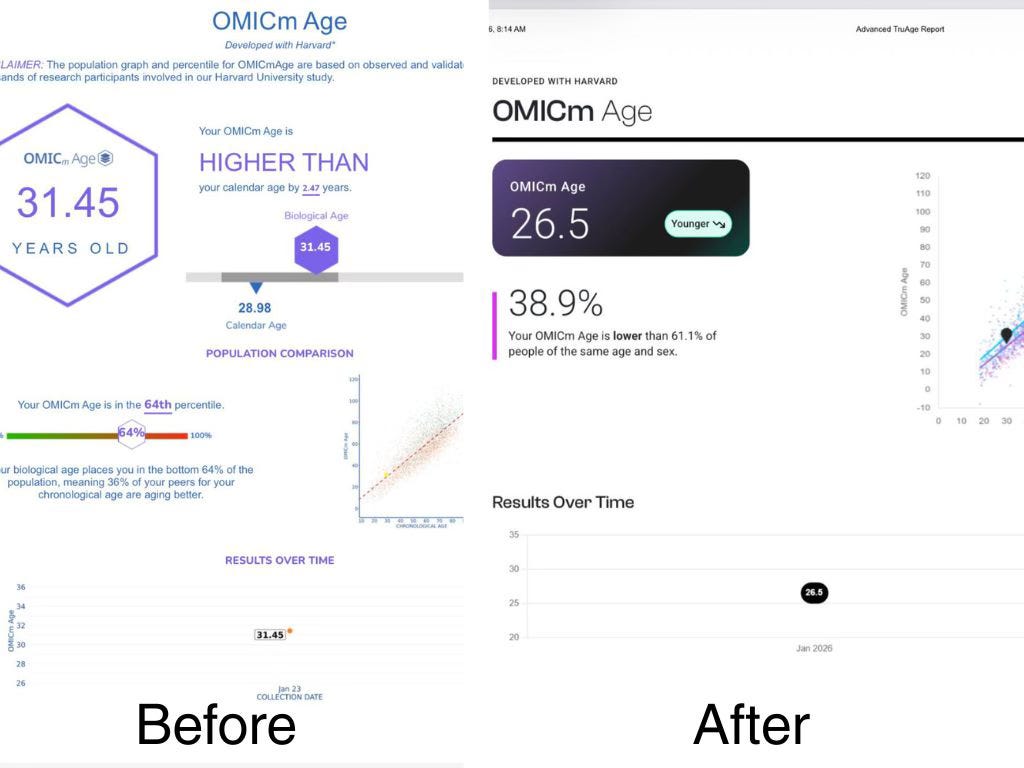
He’d just taken a TruAge test, exactly one year from when we started working together.(And he aged backwards by five years)
I wasn’t surprised by the results. The work we’ve been doing together in such a short period has been nothing short of spectacular. He’s met every expectation I had of him, and then some. He does his own research, goes ahead with additional interventions on top of the work we’re already doing, and still checks in to ask whether I think he’s on the right track.
That kind of client gets results. And he did.
First — what is a TruAge test?
TruAge (made by TruDiagnostic/FOXO Bioscience) is a DNA methylation-based biological age test.
Rather than measuring your chronological age, it measures your epigenetic age — how old your cells actually are, biologically.
It does this by analyzing methylation patterns on your DNA, which change predictably as you age.
These patterns are all directly influenced by lifestyle, stress, sleep, diet, and environmental exposures.
You take a simple finger-prick blood spot sample at home, send it to the lab, and they sequence your methylation markers against established “clocks”, the most well-known being the Horvath Clock, GrimAge, and PhenoAge.
GrimAge in particular has strong predictive validity for all-cause mortality and disease risk.
What you get back:
Your biological age relative to your chronological age
Pace of aging (how fast you’re currently aging right now)
Telomere length estimates
Immune system age
Lifestyle factor correlations
Here’s the system we used.
1. Lowering HbA1c to 5%
Chronic glycaemic dysregulation accelerates methylation aging faster than almost any other lifestyle variable. GrimAge is heavily influenced by glucose metabolism markers, and there’s a direct mechanistic reason for that.
When blood glucose runs chronically elevated, glucose molecules attach non-enzymatically to proteins and lipids in a process called glycation. The initial product is a Schiff base, which rearranges into a more stable compound called an Amadori product. HbA1c being the most well-known example of this. Left unchecked, these Amadori products undergo further irreversible reactions to form Advanced Glycation End-products (AGEs).
This is where the damage compounds.
AGEs cross-link structural proteins, most notably collagen and elastin. When collagen becomes glycated and cross-linked, it loses its flexibility and regenerative capacity — tissues stiffen, arterial walls harden, skin loses elasticity. The visible aging people attribute to “getting older” is substantially a story of accumulated protein damage from years of glycaemic mismanagement.
Beyond the structural damage, AGEs bind to specific receptors called RAGE (Receptor for Advanced Glycation End-products), which activates NF-κB signalling — one of the master switches for systemic inflammation. This creates a self-perpetuating cycle: elevated glucose drives AGE formation, AGEs activate RAGE, RAGE drives chronic inflammation, and chronic inflammation accelerates epigenetic aging.
There’s also the mitochondrial angle. Glycated proteins impair electron transport chain function directly, reducing ATP output and increasing reactive oxygen species production. which then causes further oxidative damage to DNA and accelerates methylation clock progression.
Getting HbA1c into the low 5s doesn’t just reduce a number on a lab panel. It removes the primary driver of protein cross-linking, shuts down RAGE-mediated inflammation, and protects the structural and mitochondrial integrity that biological age tests are actually measuring.
It is the single highest-leverage intervention available, Everything else builds on top of it.
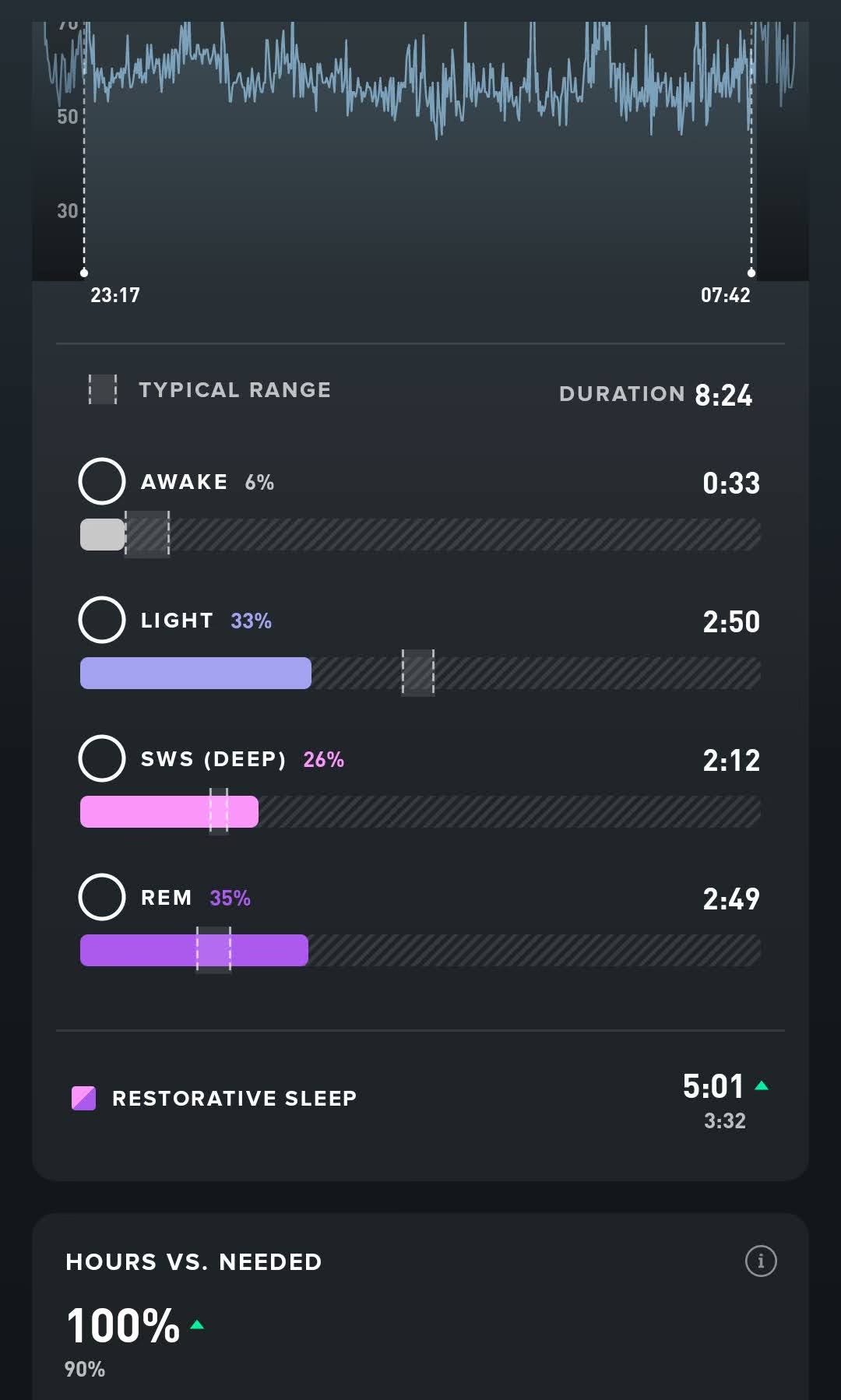
2. At least 4 hours of restorative sleep
Not just total sleep, restorative sleep. Deep and REM stages are where cellular repair, memory consolidation, and growth hormone secretion happen. If you’re not getting quality slow-wave sleep, you’re aging faster than you think.