
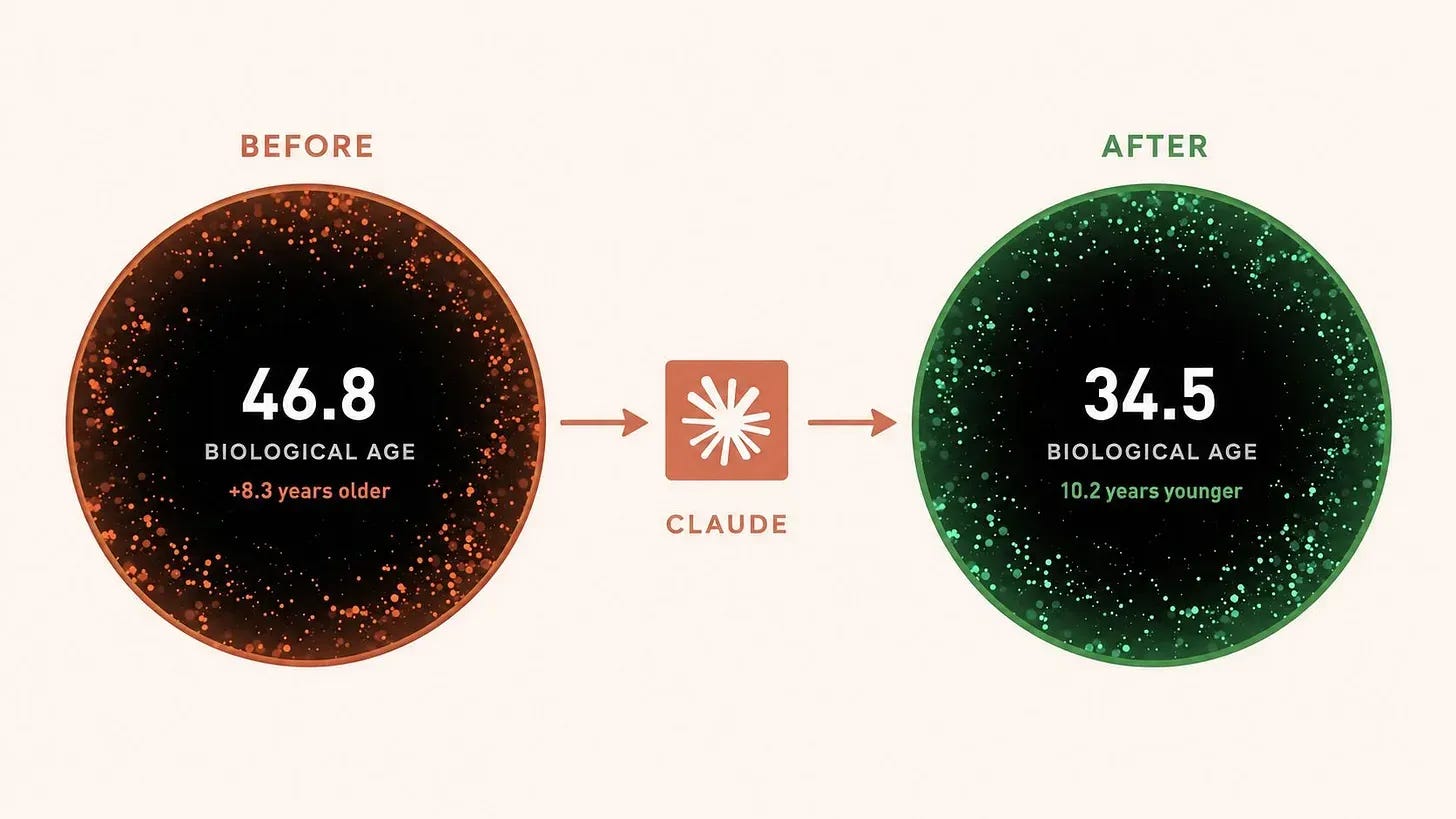
Isnt the purpose of data to enable better-informed decisions?
Then why should your health data be any different?
You see it all the time. genetics tests. Whoop. Weightlifting logbooks. Bloodwork.
You gather information from everywhere --- and then it goes into a spreadsheet, an obsidian note, or a PDF that sits in a folder, never to be touched again.
Or as i like to call it the dead sea scrolls of health data.

What’s the point of collecting this data if it never informs a single one of our decisions?
Take traders. They don’t aggregate data to feel smart. (well some of them dont)
They do it to make better trades and MORE money.
That’s the whole point. Data has a job. The moment your data stops doing its job, its no longer intelligence.
It’s clutter.
This question has been nagging me for weeks. It makes me viscerally angry.
Because if you’re like me, you’ve probably fallen into this trap before.
The trap is collecting for the sake of collecting, the illusion of progress
The comfort of a full dashboard. But the objective was never to have data for datas sake and somehow we all lost ourselves along the way.
The objective is to fill the unknowns so you can make more informed decisions, to either prevent disease UPSTREAM, improve performance, or improve health.
And If your data doesn’t feed ONE of those three decisions, it’s vanity and status signalling.
And you’re mentally masturbating with data collection. (call that collection porn)
Well then smart arse whats the alternative and how do i fix it?
First, don’t go solution-first.
Everyone wants a quick protocol, supplement, the hack they found on a reddit forum in 2017.
But the best thing you can do is stop and ask
What problem am I actually trying to solve? (name it)
When my ferritin is flagged low, my instincticual monkey brain is telling me to take iron supplements.
The real question isnt supposed to be what do I take
Its why is the ferritin dropping?
Maybe its the fact you havent had an iron rich meal in two weeks after a blood-donation donald.
2) Second, let the other data speak before you rush
A single metric is almost NEVER the whole story.
Lets say your resting heart rate has crept up for a month. You could fixate on that number. Or you could look at what was happening in the weeks before it moved. worse sleep quality, higher training load, a stressful stretch at work because karen from HR is giving you jip
The heart rate spike is the last thing to show up in trends.
The drivers and the decisions you made showed up weeks earlier, and its important to remember that the symptom tells you there’s a fire somewhere
But the rest of the data tells you where that fire started.
3) Third, contextualize, then constrain. What’s the context? Is this lifestyle-fixable, sleep, nutrition, training, recovery, stress
Or does it need actual intervention, pharma, a lab panel, a doctor? Be honest about the difference.
Then remove optionality for ambiguity’s sake. Don’t change your sleep, your diet, AND your supplements in the same week, now you don’t know what worked. Change one thing. observe it. Only then move the next levers. One variable at a time is slow-feeling but it’s the only way you ever actually learn what works.
The more time you spend nailing a problem down, the more likely you are to fix it. and haste is just expensive trial-and-error.
Thats all from me for today.
Oran/Biohacker.