
As someone who’s always looking at the next novel method to stack onto other small interventions
Because on a personal I view my health as a long-term investment of compound interest that you build over time
As a result I try to create in-depth protocols that pull on multiple levers at the same time through a systems thinking approach.
Peter Senge: "Systems thinking is a discipline for seeing wholes. It is a framework for seeing interrelationships rather than things, for seeing 'patterns of change' rather than 'static snapshots.
One such systems intervention stack that I use is controlling blood sugar levels longterm and combining antioxidant supplementation interventions of Vitamin E + Ubiquinol.
Why?
I will keep this super simple so you can follow,
When it comes to LDL or AT LEAST oxidized LDL.
Being insulin resistant or having poor blood sugar control
Creates an unfavorable environment for your long-term cardiovascular health.
Where your body turns into an oxidation central for all the LDL particles in your blood, and over time that means more LDL is being oxidized which can act as atherogenic and drive plaque buildup downstream.
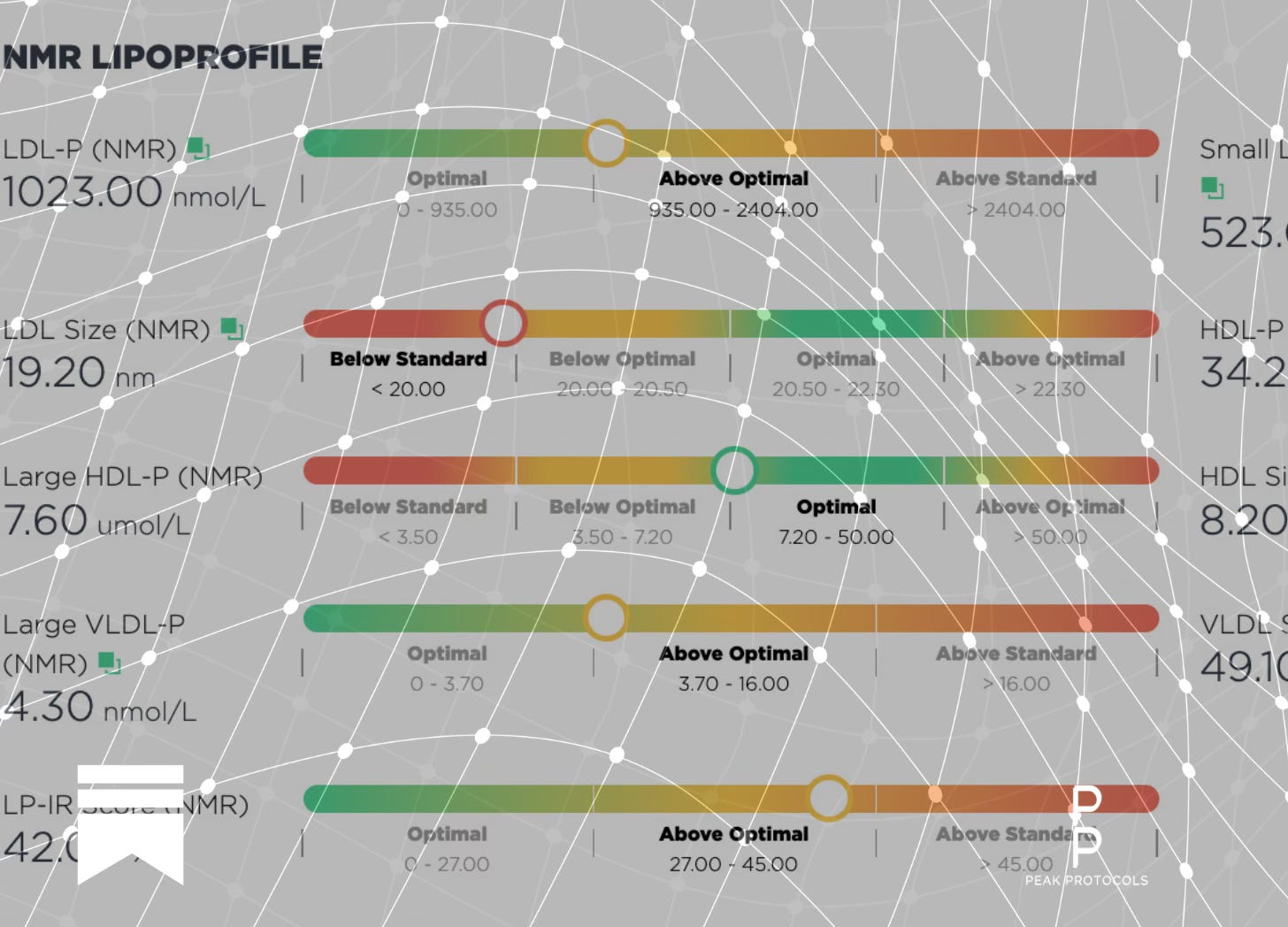
Why does Insulin resistance drive More LDL Oxidation?
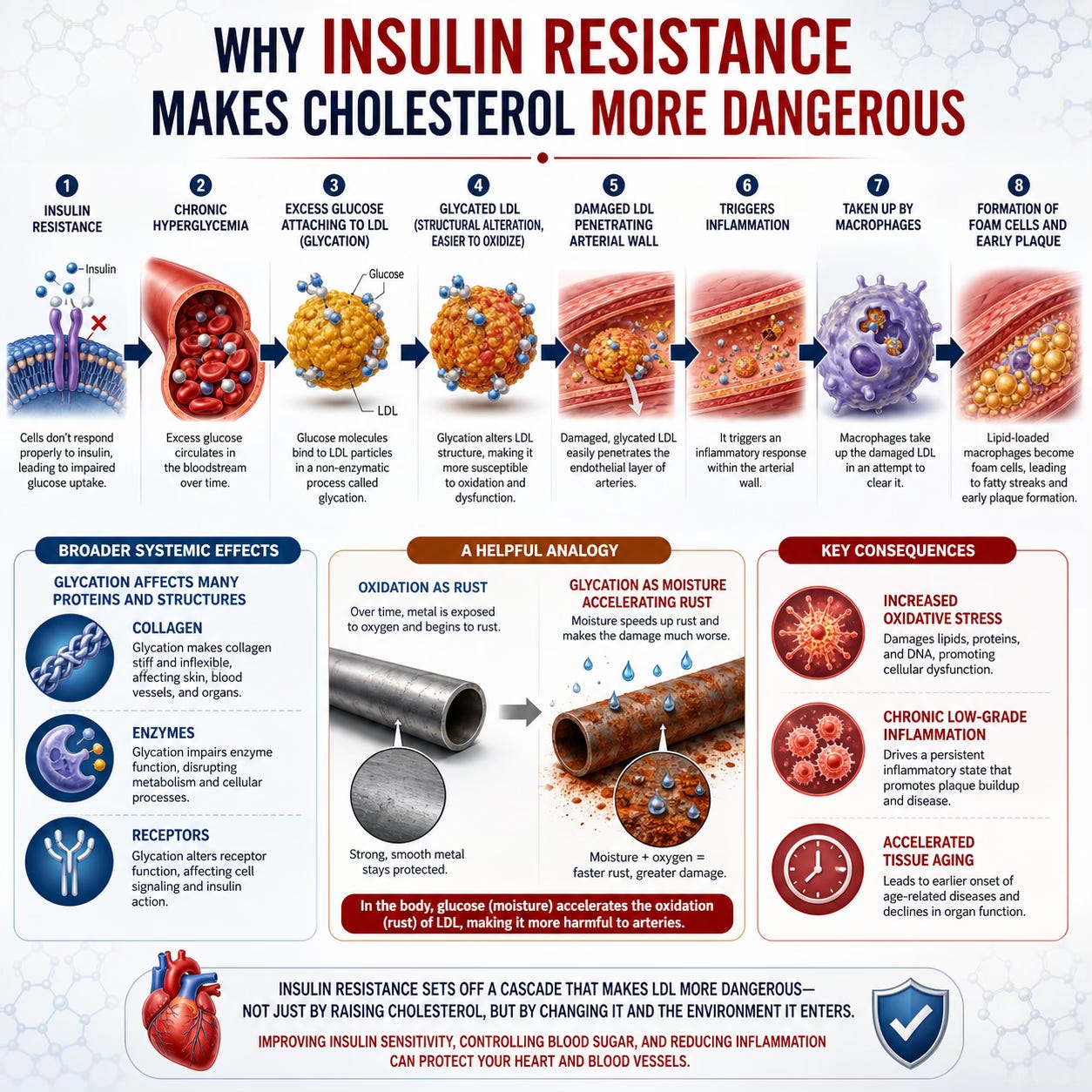
1. Glycation Makes LDL Oxidation-Prone
Insulin resistance → state of chronic hyperglycemia
High glucose attaches to LDL particles (glycation)
Glycated LDL = structurally modified = much easier to oxidize
Analogy to use = Like rusting metal - glycation is the moisture that makes rust happen faster
2. Increased Oxidative Stress Environment
Insulin resistance → mitochondrial dysfunction
Mitochondria produce more reactive oxygen species (ROS)
More ROS in circulation = more oxidative stress
More oxidative stress = more LDL gets oxidized
3. Small, Dense LDL (Pattern B) Dominates
Insulin resistance shifts you to Pattern B lipid profile.
Small, dense LDL particles are:
More easily oxidized (structural vulnerability)
More easily penetrate arterial walls (small size)
Stay in circulation longer (more time to get oxidized)
This is why Pattern B is so dangerous.
