
By age 70, thousands of genes that were once active in your early 20s have gone silent
The genes are still there of-course
But they are laying dormant and something is blocking them
And that something can be indeed be UNLOCKED.
(according to the russians that is)
This is because the actual DNA sequence
Stays largely intact throughout your life from the moment you’re born until the day you die
The problem is that your instructions slowly disappear, and the elegant machinery that reads those instructions stops working over time.
This is where chromatin comes in
The DNA gatekeeper that none of you have probably heard of, inside every cell in your body sits roughly two metres of DNA(quite long when you think about it)
So your cells solve this problem/length with a very elegant packaging system.
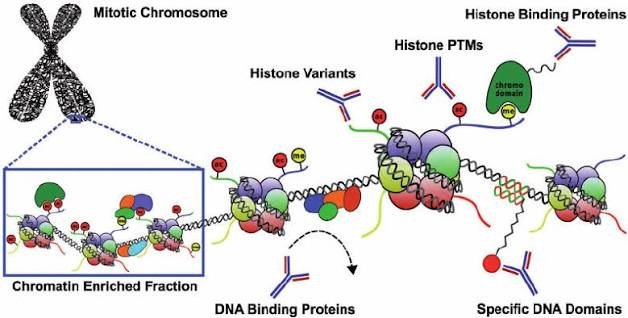
DNA wraps around proteins called histones to form structures called nucleosomes
And those nucleosomes coil and fold into chromatin fibres
And when the cell divides, chromatin condenses further still into the chromosomes and you probably recognize this from highschool/college biology class.
But chromatin is not just there to store information It’s also a control system.
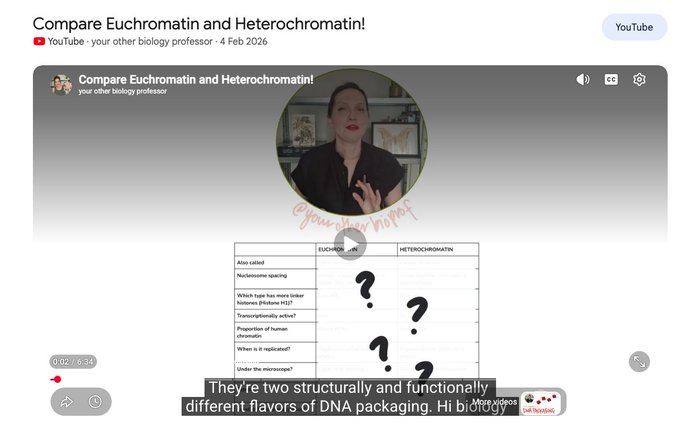
Tightly packed chromatin. called heterochromatin physically hides your DNA from the cellular machinery that reads it.
Where loosely packed chromatin, called euchromatin then exposes it, making genes accessible for transcription
Which is the process of copying DNA into RNA, which then gets translated into proteins.
Think of it in this simple way:
Tightly packed chromatin = your DNA is hidden.
Loosely packed chromatin = your DNA is more accessible.
This is why researchers often call chromatin the gatekeeper of gene expression.
Before any gene can be expressed, before any protein can be made chromatins structure has to permit that process.
Here’s where it gets super important and why you need to keep reading.
As you age, your chromatin progressively dysregulates.
Some regions that were once open and actively transcribed shift into heterochromatin, tightly packed, inaccessible, silent.
Others that should remain silent become active, driving inflammation and cellular dysfunction.
This is called heterochromatinisation, and it’s one of the most underappreciated drivers of biological aging.
The genes themselves haven’t mutated, and the actual code is still there.
But the machinery can no longer reach the right regions at the right times.
Ribosomal genes, the ones responsible for protein synthesis start to fall silent, metabolic pathways slow down and tissue-specific functions decline with time.
So you can think of it in a way that your body doesn’t forget how to function well
It just loses access to the instructions that once gave it the power to
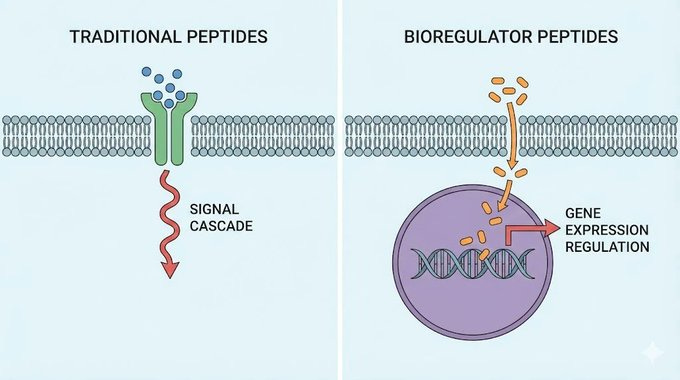
Which is where peptide bioregulators come in.
Peptide bioregulators, particularly the short di- tripeptides and tetrapeptides developed through Khavinson’s decades of research
Specifically target something called selective deheterochromatinisation
Which is the targeted reopening of condensed chromatin in specific chromosomal regions.
Peptides like Vesugen (KED) and Vilon are small enough to enter the nucleus and interact directly with DNA promoter regions and histone proteins, particularly H1 and H3. and by doing so, they can shift localised chromatin from a condensed, transcriptionally silent state back toward more open euchromatin.
The result = genes that had gone quiet after decades of dormancy with age become slowly become accessible again = transcription factors and RNA polymerase can reach the DNA.
= Protein synthesis resumes as normal to youthful levels.
In the case of Pinealon- the target is the pineal gland’s AANAT enzyme the rate-limiting step in melatonin synthesis.
Age-related heterochromatinisation silences the genes regulating AANAT expression.
Pinealon’s proposed mechanism is reopening protein function to restore more youthful melatonin output.
In the case of Vesugen another peptide (KED) the targets include vascular and cardiovascular gene networks. Research shows this peptide can.
- Enhances mesenchymal stem cell proliferation
- Reduces senescence markers and SASP-like inflammatory secretory profiles
- Modulates Ki-67 and other proliferation-related genes in vascular cells
- May upregulate SIRT1 — a central longevity regulator
A small human trial using Pinealon and Vesugen in polymorbid patients aged 41–83 CNS-improving effects, alongside a slower rate of increase in biological age indices.
Vesugen also showed stronger geroprotective effects on the measured markers.
Notably, these epigenetic effects can persist even after the peptide course ends, because you’ve actually changed the chromatin architecture
Not just temporarily flooded a receptor like other peptides do.
How Khavinson Found Them
Most peptide research starts with a hypothesis and works toward one certain molecule.
Khavinson’s approach was different.
He started with tissue. Specifically, organ-derived proteins. from the pineal gland, thymus, heart, cartilage, vascular tissue.
Big K
He would isolate and hydrolyze these proteins, breaking them down into their smallest functional fragments, then identify which fragments retained biological regulatory activity
What he found were di and tripeptides tetrapeptides sequences of just two or three/four amino acids, that appeared to be naturally embedded within larger protein structures.
Fragments that the body itself can understand and that appear to function as signaling molecules in their own right.
The implication is significant, these peptides may represent the body’s own internal regulatory language.
Short sequences that can communicate state, trigger gene expression, and modulate chromatin. all from within the natural lifecycle of proteins.
The Lysine Patter
Here’s where things gets interesting.
Across Khavinson’s library of bioregulators i seen a pattern emerg. At least 60% of the most relevant bioactive peptides contain lysine specifically at either the start or the end of their sequence.
Look at some of the most studied compounds:
- Vilon (Lys-Glu). starts with lysine
- Vesugen/KED (Lys-Glu-Asp) starts with lysine
The lysine dominance has a mechanistic reason for it.
Lysine carries a positive charge at physiological pH. DNA carries a strong negative charge, from its phosphate backbone. Opposites attract. Positively charged amino acids have a natural electrostatic affinity for DNA, which is precisely why histones themselves are extraordinarily rich in lysine and arginine.
Their positively charged tails grip the negatively charged DNA to form nucleosome structure.
So when short peptides containing lysine enter the nucleus and interact with histones, they’re not doing something foreign to the system, they’re just speaking the native language of the body.
A Heuristic for future discovery of new peptides.
This pattern matters beyond the existing peptide library that we have.
If lysine at the terminal position is a recurring feature of biologically active chromatin-modulating peptides, and the mechanistic reason for that is the electrostatic affinity for DNA and histone interaction sites
Then you have the beginnings of a discovery heuristic.
Future tissue-derived peptide fragments containing terminal lysine residues become candidates worth screening first.
It doesn’t guarantee that there will be activity, but it narrows the search space considerably. In a field where the combinatorial space of even tripeptides is in the thousands, a structural rule that eliminates false candidates early has serious research value.
This is how science naturally progresses by trying to avoid the random screening of millions of molecules
But through more mechanistic/targeted insight that generates testable predictions.
Hope you enjoyed the read Oran/Biohacker.