
If you’ve spent any time in the biohacking or peptide space, you’ve probably heard someone usually an MD with a blue checkmark lol
Make the big claim that BPC-157 “never got FDA approved because of its safety concerns.”
Let me be clear, that’s a lie.
I’ve been watching this narrative spread online, and it’s time to set the record straight
BPC-157 didn’t fail because it was unsafe
It failed because of corporate acquisitions, strategic realignment, and the economics of drug development
The same fate that kills hundreds of promising compounds every year
If you want to understand why it never made it to your pharmacy
You need to understand how drug development actually works, what happened to Pliva Pharmaceuticals, and why “no FDA approval” doesn’t mean “unsafe.”
The Origin Story: Pliva Pharmaceuticals and the PL Codes
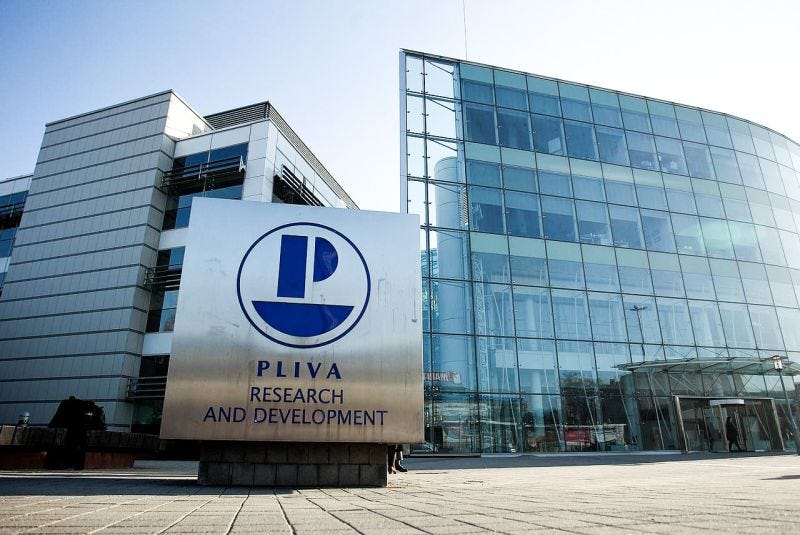
BPC-157 didn’t come from some underground lab or sketchy supplement company. It was developed by Pliva Pharmaceuticals, a Croatian pharmaceutical company founded in 1921, as part of a legitimate R&D program in the 1990s and early 2000s.
The peptide was given investigational codes during clinical development:
•PL-14736
•PLD-116
•PL-10
Notice the “PL” prefix? That stands for Pliva. These codes are how pharmaceutical companies track compounds through their development pipeline
The fact that BPC-157 had multiple investigational codes means it was being seriously evaluated for multiple indications not just thrown together in a lab and hoped for the best
The lead researcher was Professor Predrag Sikiric at the University of Zagreb, who published extensively on BPC-157’s gastroprotective and tissue-healing properties.
This wasn’t some random guy in croatia. It was peer-reviewed research backed by a legitimate pharmaceutical company.
The Preclinical Safety Data: Spoiler Alert It’s Excellent
Before any drug goes into humans, it has to pass preclinical safety testing. This means testing in animals (mice, rats, rabbits, dogs) to identify toxicity, mutagenicity (DNA damage), teratogenicity (birth defects), and other red flags
In 2020, a comprehensive preclinical safety evaluation of BPC-157 was published in Regulatory Toxicology and Pharmacology
a peer-reviewed journal specifically focused on drug safety
The study tested BPC-157 in mice, rats, rabbits, and dogs across multiple toxicity endpoints:
What they tested:
•Single-dose toxicity (acute toxicity)
•Repeated-dose toxicity (chronic exposure)
•Local tolerance (irritation at injection site)
•Genetic toxicity (mutagenicity/genotoxicity)
•Embryo-fetal toxicity (teratogenicity/birth defects)
What they found:
“BPC157 was well tolerated and did not cause any serious toxicity in mice, rats, rabbits and dogs. These preclinical safety data contribute to the initiation of an ongoing clinical study.”
Let me translate that from scientific language
No serious toxicity. DNA damage. birth defects. or organ damage. (It actually protects kidneys and liver)
The only finding that was worth noting was a decrease in creatinine levels in dogs at a dose of 2 mg/kg but not at lower doses and the animals recovered spontaneously after 2 weeks of stopping the drug. The researchers attributed this to the pharmacological activity of BPC-157 (i.e., it was doing what it’s supposed to do), not toxicity
This is an excellent safety profile. For context, most drugs that make it to market have far more concerning preclinical findings that are deemed “acceptable risk” in the context of their therapeutic benefit.
So if the preclinical safety was this good, why didn’t it move forward?
The Clinical Trials: Phase I and II Success
BPC-157 didn’t just pass preclinical testing it made it into HUMAN clinical trials.
Phase I: Safety and Tolerability in Humans
Phase I trials are all about safety. You’re giving the drug to healthy volunteers (or sometimes patients) to see if it causes adverse effects, how it’s metabolized, and what the safe dose range is.
BPC-157 passed Phase I. No serious adverse events. No toxicity signals.2 4
Phase II: Efficacy in Inflammatory Bowel Disease (IBD)
Phase II trials test whether the drug actually works in patients with the target disease. For BPC-157, the primary indication was inflammatory bowel disease (IBD), specifically ulcerative colitis.
Multiple Phase II studies were published showing:
•Effective in treating ulcerative colitis
•Effective in healing colocutaneous fistulas (abnormal connections between the colon and skin)
•Well-tolerated with no serious adverse events
•Improved tissue healing in tendon and ligament injuries
These are positive results. The drug worked. It was safe. It was ready for Phase III trials the large, expensive trials that prove efficacy at scale and lead to FDA approval.
So what happened you ask?
The Corporate Acquisition Timeline: Where It All Went Wrong
Here’s where the story stops being about science and starts being about money.
October 2006: Barr Pharmaceuticals Acquires Pliva
In October 2006, Barr Pharmaceuticals completed a tender offer to acquire Pliva for approximately $2.5 billion USD.6 7
This wasn’t a friendly merger. There was a bidding war between Barr and Actavis Group, both offering around $2.5 billion. Barr won.8
What happens during a pharmaceutical acquisition?
When a big pharma company acquires a smaller one, they don’t just continue all the target company’s R&D programs. They:
1.Prioritize their own pipeline over the acquired company’s pipeline
2.Cut costs by eliminating “redundant” or “non-strategic” programs
3.Reallocate resources to drugs closer to market or with higher commercial potential
Pliva’s BPC-157 program still in Phase II, years away from market, targeting a relatively niche indication (IBD) became a low priority during the integration.
December 2008: Teva Acquires Barr (and Pliva with It)
Just two years later, Teva Pharmaceutical Industries—the world’s largest generic drug manufacturer acquired Barr for $7.46 billion USD.
On December 23, 2008, Barr became a wholly owned subsidiary of Teva. Pliva, which was already a subsidiary of Barr, became part of Teva’s generics and active pharmaceutical ingredients (API) division.
This was the death blow for BPC-157
Teva’s business model is generic drugs bhigh-volume, low-margin, off-patent medications. They’re the company that makes generic Adderall, not novel peptides that require expensive Phase III trials.
When Teva acquired Barr (and Pliva), they had zero interest in funding a Phase III trial for a novel peptide with uncertain commercial potential. As a result they shelved it.
Why Phase III Never Happened: The Economics of Drug Development
Let’s talk about what it actually takes to get a drug to market.
The Cost of Phase III Trials
Phase III trials are massively expensive. We’re talking $100 million to $300 million per trial, depending on the indication and trial design.11 12
For a company like Teva focused on generics with profit margins in the single digits spending $100M+ on a Phase III trial for a novel peptide is a terrible investment. Especially when:
•The drug is still years away from approval
•The market size for IBD drugs is competitive
•The drug could still fail in Phase III (50% of drugs do)
The Failure Rate of Drug Development
Here’s a stat that most people don’t know: 90% of drugs that enter clinical trials never get FDA approval.
Breaking it down by phase:
•Phase I failure rate: ~30%
•Phase II failure rate: ~50%
•Phase III failure rate: ~50%12 13
The reasons drugs fail in Phase III (in order of frequency):
1.Lack of efficacy (~50% of failures)
2.Safety/toxicity issues (~30% of failures)
3.Commercial/strategic reasons (~10% of failures)
4.Poor strategic planning (~10% of failures)
BPC-157 falls into category 3 and 4: commercial and strategic reasons
It didn’t fail because it was unsafe. It didn’t fail because it didn’t work. It failed because the company that owned it decided not to fund Phase III trials. (Money game)
What “No FDA Approval” Actually Means
This is the part that actually drives me insane lol
People online including some doctors who should know better see “not FDA approved” and immediately assume “unsafe” or “doesn’t work.”
That’s not how drug development actually works.
A drug can be:
•Safe and effective but never FDA approved because the company didn’t pursue approval
•Safe and effective but never FDA approved because the company went bankrupt
•Safe and effective but never FDA approved because it was deprioritized during a merger
•Safe and effective but never FDA approved because the market size didn’t justify the cost of Phase III trials
BPC-157 is in this category.
The preclinical safety data is excellent
The Phase I and II clinical data is positive.
The reason it’s not FDA approved is corporate strategy, nothing to do with the science or safety
The Impact of M&A on Drug Pipelines: A Common Story
BPC-157 isn’t a unique circumstance. This happens ALL the time in the pharmaceutical industry
When large pharma companies acquire smaller ones, the target company’s drug pipeline is often deprioritized or abandoned. A 2024 study on the impact of pharmaceutical M&A found that:
•Acquiring companies prioritize their own pipeline over the target’s
•Integration costs and strategic realignment delay development
•Generics-focused companies (like Teva) often abandon novel drug development
•Drugs in early/mid-stage development are most likely to be shelved
This is exactly what happened to BPC-157. It wasn’t killed by bad science. It was killed by spreadsheets and strategic planning meetings + money games
The Real Lesson: Drug Development Is Not a Meritocracy
Here’s the uncomfortable truth about pharmaceuticals: the best drugs arent always the ones that make it to market.
Drug development is not a pure meritocracy where the safest, most effective compounds rise to the top. It’s a business. And like any business, decisions are made based on:
•Return on investment
•Market size
•Competitive landscape
•Corporate strategy
•Regulatory risk
BPC-157 had excellent preclinical safety data. It had positive Phase I and II results. It was developed by a legitimate pharmaceutical company with proper investigational codes and peer-reviewed research.
But it got caught in two corporate acquisitions within two years, ended up in the hands of a generics-focused company, and was shelved because it didn’t fit their business model.
What This Means for You
If you’re considering using BPC-157, here’s what you need to know:
1. The preclinical safety data is excellent.
No serious toxicity in mice, rats, rabbits, or dogs. No genetic toxicity. No birth defects. Well-tolerated at all tested doses.3
2. The clinical safety data (Phase I and II) is positive.
No serious adverse events in human trials. Effective for IBD and tissue healing.2 4 5
3. It was never tested in Phase III trials.
This means we don’t have large-scale, long-term safety and efficacy data in humans. That’s a gap in the evidence but it’s not evidence of harm.
4. The reason it’s not FDA approved is corporate/commercial, not scientific.
Pliva was acquired by Barr, which was acquired by Teva. Teva is a generics company that had no interest in funding Phase III trials for a novel peptide.
5. “Not FDA approved” ≠ “unsafe.”
The FDA approval process is about risk-benefit analysis in the context of a specific indication. BPC-157 never got the chance to complete that process.
References
[1] WIPO. PLIVA: Patenting a Way to Global Success in Pharmaceutics. 2025.
[6] BioSpace. Barr Laboratories Finalizes Acquisition Of Pliva D.D. October 24, 2006.
[7] SEC Filing. Barr Finalizes Acquisition of PLIVA d.d. October 24, 2006.
[8] New York Times. Barr Pharmaceuticals Swallows Croatia’s Pliva. June 27, 2006.
[9] Teva Pharmaceutical Industries. Teva Completes Acquisition of Barr. December 23, 2008.
[10] New York Times. Teva Buys Drug Rival, Barr, for $7.46 Billion. July 19, 2008.
[11] Pretorius S. Phase III Trial Failures: Costly, But Preventable. Applied Clinical Trials. 2016.
[14] American Bar Association. Impact of M&A on Drug Development. April 16, 2024.